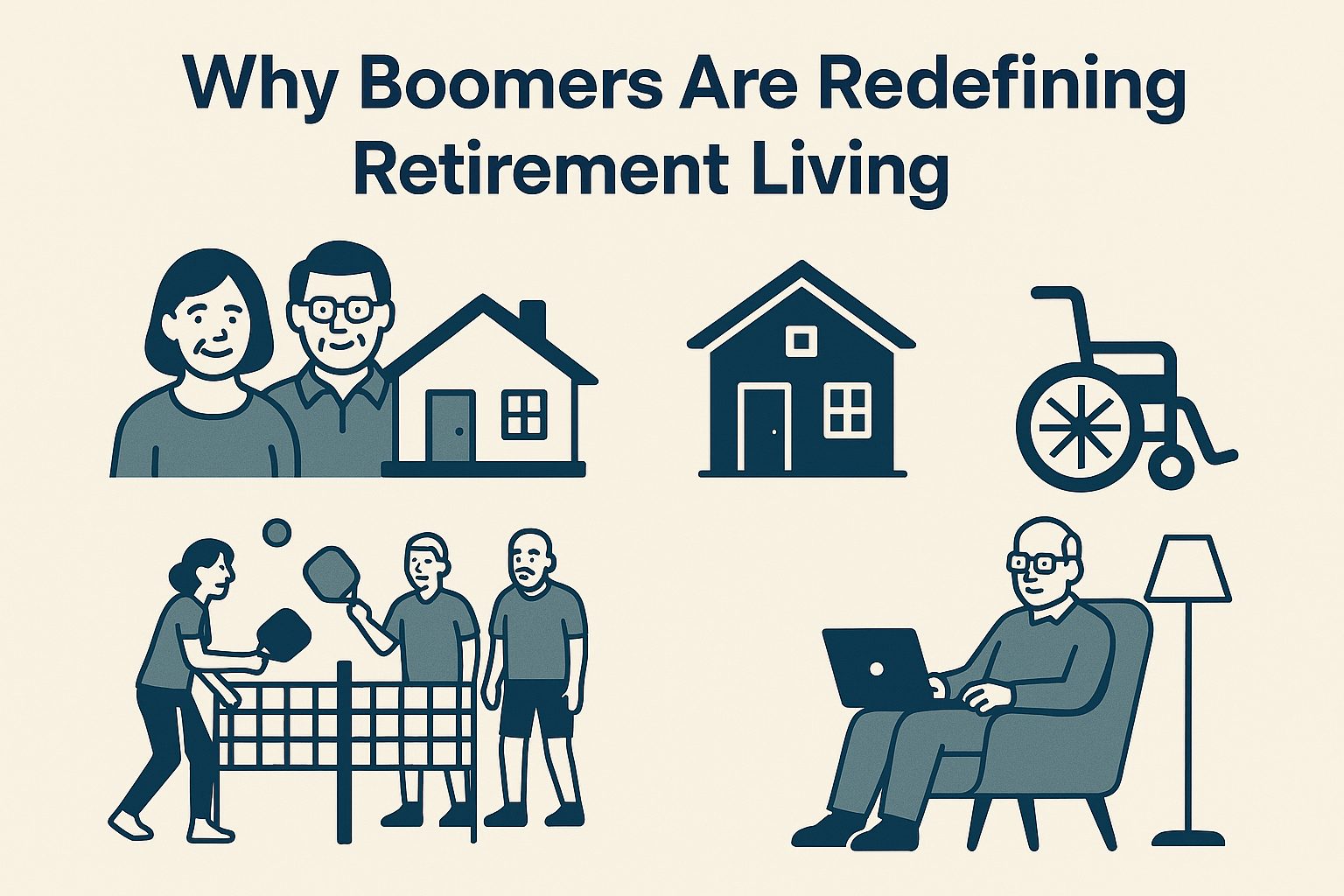
Why Boomers Are Redefining Retirement Living (Not Just “Downsizing”)
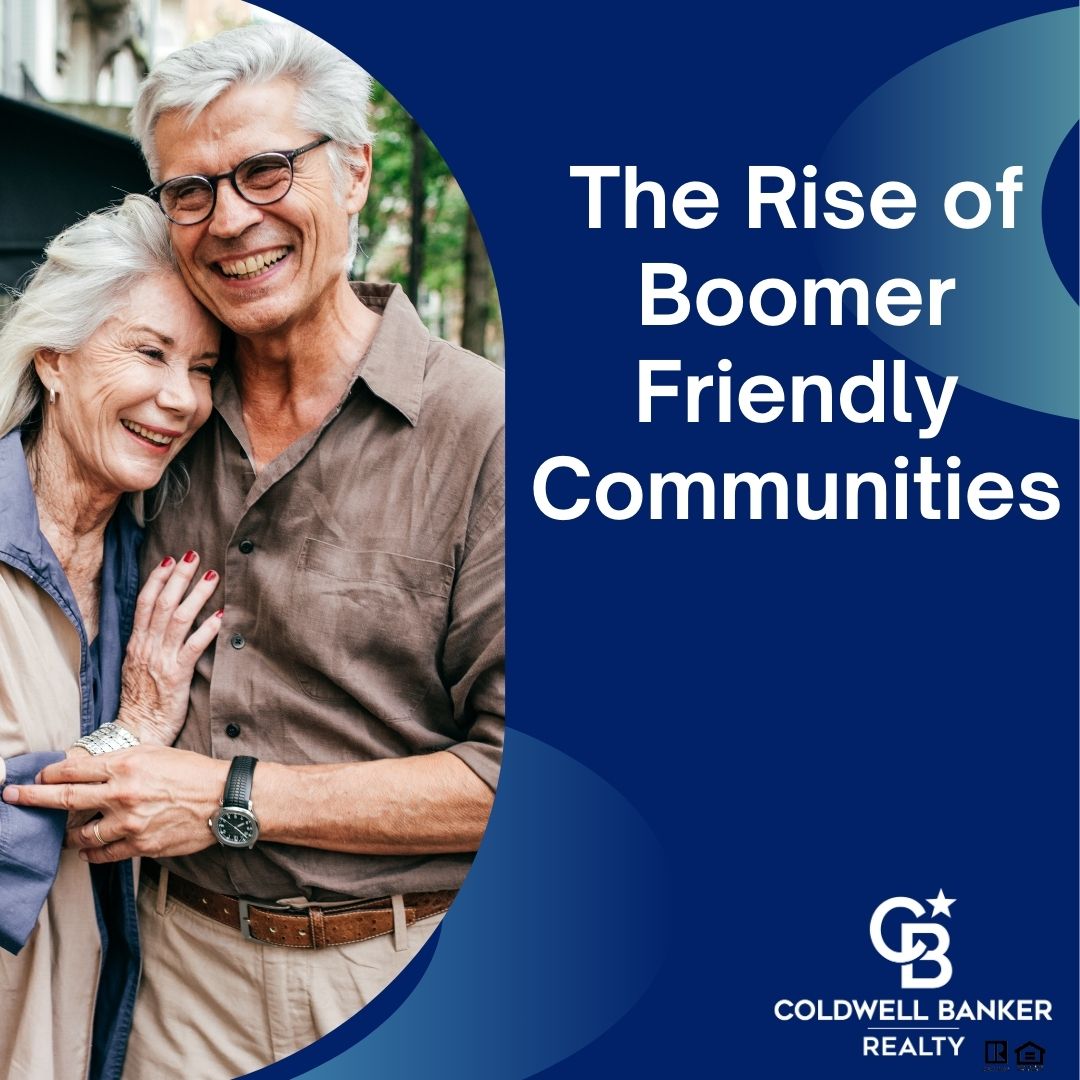
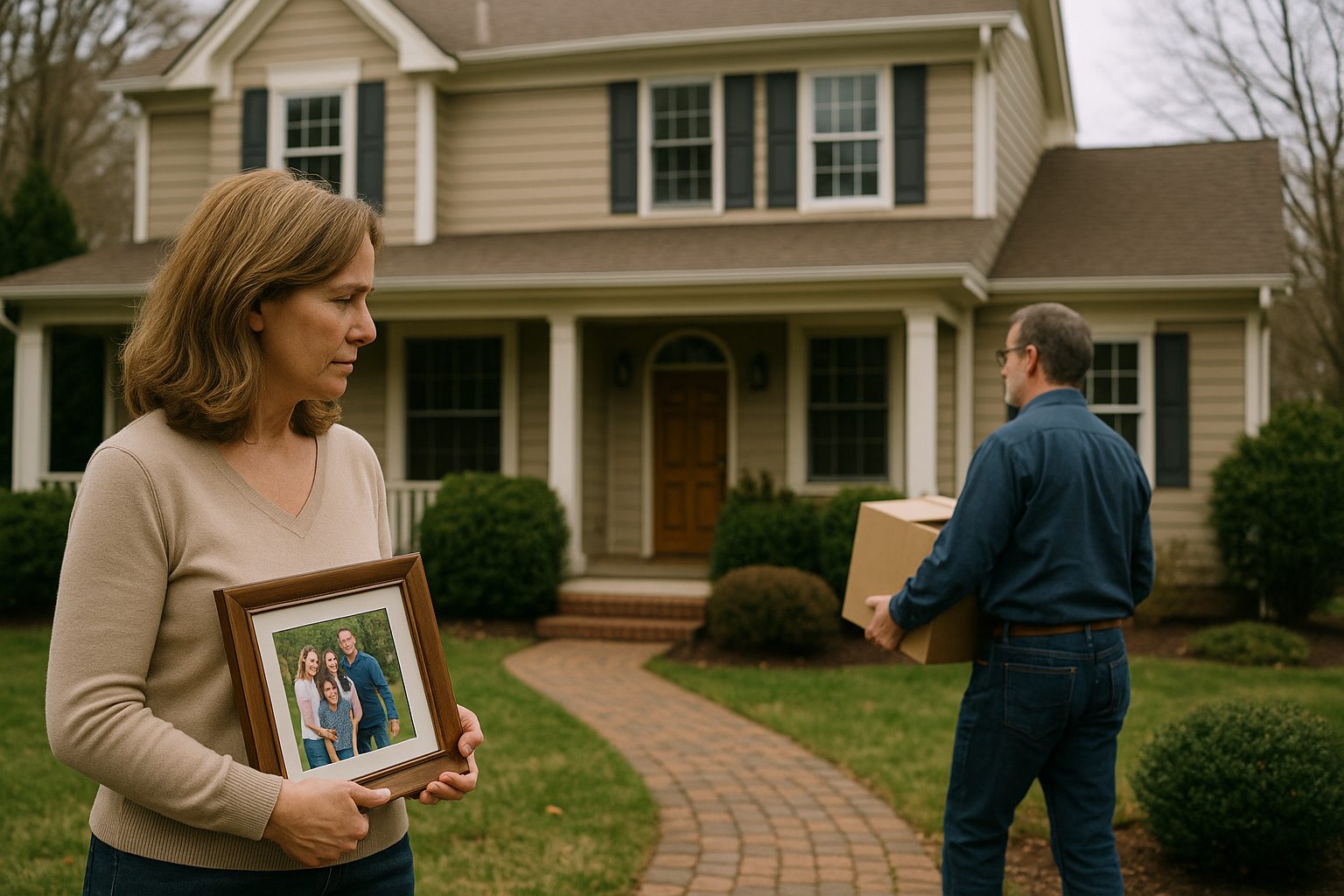
Baby Boomers are rewriting the playbook for life after 60. Instead of a one-size-fits-all move to a traditional retirement community, they’re choosing options that maximize autonomy, purpose, proximity to family, and lifestyle—on their own terms. With a record number of Americans turning 65 each year through 2027, the ripple effects on housing, neighborhoods, and the broader real estate market are enormous.
1) The Demographic Wave: “Peak 65” Changes Everything
The U.S. has entered the “Peak 65” era—an unprecedented surge of Americans turning 65 each year (roughly 4.1 million annually from 2024 through 2027). This is the largest such wave in U.S. history and it’s redefining what those years look like.
Zoom out to the population level and the story gets even bigger. The older adult population (65+) has been rising rapidly; in 2024, older adults outnumbered children in nearly half of U.S. counties, and 11 states now have more older adults than kids. That demographic tilt will continue to shape housing demand, community design, and services for years.
Bottom line: This isn’t a niche story about retirement communities. It’s a tidal shift that touches every neighborhood, price point, and property type.
2) Retirement ≠ Retiring: Work, Purpose, and Flexible Living
For many Boomers, age 65 is not a “stop-work” line. A growing share of Americans 65+ remain employed, earning higher wages than in past decades—and reimagining retirement as a flexible, purpose-driven stage.
AARP spotlights the new reality: Many late Boomers hitting 65 still work, stay active, and postpone “traditional” retirement. The “senior citizen” label simply doesn’t fit how they live.
Housing implication: Instead of retirement enclaves far from job centers, many want walkable, connected locations with access to culture, healthcare, and airports—plus floor plans that support hybrid work, hobbies, and hosting grandkids.
3) Where Boomers Want to Live: Aging in Place vs. “Right-Sizing”
Aging in Place (AIP) remains a strong preference. Fannie Mae’s 2024 research shows homeowners 60+ overwhelmingly like their homes, view home equity as a financial reserve, and expect to age in place. Notably, only about 15% said they’d consider tapping equity for extra retirement income.
AARP’s most recent Home & Community Preferences survey (published Dec 2024, updated Mar 2025) echoes that desire: the vast majority of adults 50+ want to remain in their current home/community as long as possible—even as roughly 44% say a move could be in the cards to manage costs, care, or maintenance. Interestingly, 1 in 4 older homeowners would consider adding an ADU (in-law suite, backyard cottage) to accommodate a loved one or caregiver.
But there’s a reality check: The nation’s housing stock isn’t fully ready for aging. The Census Bureau found only about 40% of U.S. homes have basic aging-ready features (step-free entry + bed/bath on the first floor), and ~4 million older households report difficulty using their homes as-is.
What this means: Many Boomers will modify their homes—or “right-size” to single-level, low-maintenance homes or age-forward communities that align better with how they actually live now.
4) The Housing Formats Boomers Are Choosing
A) Aging in Place with Smart Upgrades
From no-step entries, wider doorways, curb less showers, and better lighting to smart-home tech (fall detection, voice controls), the AIP toolkit is expanding—and more accessible than ever. Many older owners are planning bathroom upgrades and mobility improvements to stay safe and independent.
B) ADUs & Multigenerational Living
Whether it’s “boomerang” kids, an aging parent, or caregiving flexibility, ADUs can unlock intergenerational support without sacrificing privacy. AARP’s latest national survey notes one in four older homeowners would consider building an ADU to create space for a loved one. Policy momentum and permitting reforms across states and cities have also helped ADUs gain traction.
Advocacy groups and industry briefs have documented ADUs’ role as flexible, age-friendly housing that can also offer supplemental income—one reason communities from coast to coast are revisiting zoning to allow more of them.
C) Amenity-Rich 55+ Active Adult Communities
Today’s 55+ “active adult” neighborhoods are not your grandparents’ retirement parks. Many are lifestyle destinations—with social programming, wellness centers, trails, pickleball, co-working lounges, and clubs—often near retail, dining, and healthcare. Industry outlooks from ULI/NIC highlight surging demand and investor interest, with active adult rentals gaining traction for middle-market seniors.
D) Urban/Suburban Walkable Redevelopments
Developers are repurposing underused retail and adding age-qualified housing within mixed-use districts—bringing Boomers closer to restaurants, medical providers, and transit. This “live-near-everything” model aligns with Boomer preferences for autonomy and convenience.
E) Village Networks & Cohousing
Beyond real estate products, “Villages” (grassroots, member-led networks that coordinate rides, home help, and social life) are scaling nationally—270+ Villages as of 2024—with more forming. These networks let older adults stay in familiar homes while tapping curated services and community.
5) Health, Tech & Home: The Rise of Supportive “AgeTech”
Telehealth, remote monitoring, and AI-enabled safety tech are making it easier to live independently longer. Surveys in 2024 found strong support for tech that helps older adults age in place; think medical alert systems, smart sensors, medication reminders, and voice assistants.
Analysts tracking the AgeTech market note that AI-driven devices and services are rapidly moving into home-based support and care coordination, from fall detection to predictive insights that can reduce hospitalizations.
Takeaway: Health happens at home. Housing that’s pre-wired, well-lit, and device-friendly will be in higher demand among aging Boomers—and will likely command a premium.
6) Financial Considerations (Equity, Costs, & Care)
- Home Equity: Despite record equity levels, older owners often prefer not to treat home equity like an ATM. In Fannie Mae’s 2024 study, only ~15% said they’d consider tapping equity to fund retirement.
- Budget Drivers: AARP’s national survey shows many 50+ adults who anticipate moving cite lowering housing and maintenance costs and property taxes as major motivators.
- Renovation vs. Relocation: Census data underscores the accessibility gap in existing homes, which can tilt the math toward either targeted renovations or a move to an age-forward home (single-level living, wider halls, roll-in shower).
- Income Mix & Security: Surveys of workers show Boomers expect to rely heavily on Social Security and retirement accounts, with many lacking a written plan—another reason predictable housing costs matter.
Pro tip: Pair your housing plan with a home maintenance plan (and a reserve budget). For some, a low-maintenance community with included exterior/landscape care beats the unpredictability of an older single-family home—especially if you love to travel.
7) How This Reshapes the Real Estate Market
- Inventory Lock-In: Older owners are staying put longer, reducing turnover and tightening supply—an effect Freddie Mac documented as seniors aging in place elevated homeownership rates among older cohorts.
- Product Shift: Investor and developer attention is moving toward active adult and middle-market senior housing, with ULI/NIC highlighting the sector’s strong risk-adjusted return outlook and an expected influx of older renters over the next decade.
- Policy & Planning: With older adults now outnumbering children in many places, local governments and planners are rethinking zoning (ADUs), accessibility codes, and transportation to support aging communities.
Net effect: Boomers are diversifying demand across resale, new construction, rental, and innovative formats. That dynamism is creating fresh opportunities for both buyers and sellers—if you know how to spot them.
8) What to Look For When You Shop (A Checklist)
Lifestyle & Location
- Walkable access to groceries, pharmacy, healthcare, parks
- Quick routes to airports/rail (for family visits and travel)
- Social infrastructure: clubs, volunteering, faith communities, adult learning
Home Design
- Single-level living or primary suite on main
- No-step entry; 36” doors/hallways; lever handles
- Curbless shower + grab bars (blocking in walls for future)
- Non-slip flooring; great lighting; minimal thresholds
- Flexible space (office/crafts/guest suite)
Community Amenities
- Fitness, trails, pools, pickleball, arts & clubs
- On-site or nearby healthcare; vetted service providers
- HOA covers exterior/landscape? Snow removal?
- Pet-friendly policies; storage for hobbies/travel gear
Tech & Safety
- Strong Wi‑Fi; ample outlets; smart switches
- Pre-wiring for sensors/cameras; medication management tech
- Emergency response access; well-marked addresses
Future-Proofing
- Space for caregiver/guest (or ADU potential)
- Proximity to adult children (or Village network availability)
9) A Quick Local Lens: Ohio & the Midwest
Ohio’s population is skewing older—by 2025, more than 1 in 4 Ohioans will be 60+. That shift intensifies demand for age-forward housing and services in cities like Cincinnati and across surrounding counties.
Regionally, many communities are planning for more aging-in-place supports, ADU-friendly zoning, and active adult options that bridge the affordability gap while preserving proximity to family. Keep an eye on walkable suburban nodes and mixed-use redevelopments near healthcare corridors.
10) FAQs
Q1: Is it better to renovate for aging in place or move to a 55+ community?
A: It depends on your home’s bones and your budget. The Census shows most homes lack key accessibility features, and millions of older households struggle with current layouts—so some upgrades are often necessary. If the scope is large (structural changes, stairs you can’t avoid), exploring single-level options or 55+ communities may be more cost-effective—and socially rewarding.
Q2: What about using a reverse mortgage to stay put?
A: Some owners do, but many are reluctant to tap equity for retirement income. Fannie Mae’s research found only about 15% of older owners would consider it. Talk with a HUD-approved counselor and your financial advisor to compare costs, obligations, and alternatives (like rightsizing to a lower-cost home).
Q3: Are ADUs worth it?
A: If permitted, ADUs can create caregiver space, multigenerational living, or supplemental income, and AARP surveys show meaningful interest among older homeowners. They can also add flexibility for resale in markets where ADUs are embraced.
Q4: I want community, not “institutional living.” Where do I look?
A: Consider active adult neighborhoods, mixed-use districts near amenities, or Village networks that bundle services and social life while you remain in your home. Visit at different times of day to feel the vibe.
Q5: Will older adults flooding the market cause more listings soon?
A: Not necessarily. Many Boomers are staying put longer, which constrains inventory; developers are responding with more 55+ and active adult rental options to meet demand.
11) Ready to Explore Your Options? (Your Boomer-Friendly Game Plan)
Whether you want to age in place confidently, add an ADU, or find a low‑maintenance, lifestyle-rich home, I’m here to make the next step simple and stress-free.
I’m Mike McEntush—your REALTOR® advocate.
Here’s how we’ll work together:
- 30‑Minute Strategy Call: We’ll clarify your top goals (family proximity, budget, hobbies, health access).
- Choice Architecture: I’ll map three viable pathways (Renovate, Right-Size, or Community Move) with cost, timeline, and pros/cons.
- Curated Options: Handpicked age-forward homes/communities, potential ADU scenarios, and trusted contractors for AIP upgrades.
- Smooth Transitions: From financing and tax considerations to decluttering and move logistics—I’ll quarterback the details.
👉 Let’s start with a consult. Message me with “Boomer Game Plan” and the zip code you’re considering. We’ll take it from there at your pace.
#RealEstate, #Realtor, #RetirementLiving, #BabyBoomers, #AgingInPlace, #Rightsizing, #Downsizing, #55Plus, #ActiveAdult, #SeniorHousing, #ADU, #MultigenerationalLiving, #SmartHome, #WalkableCommunities, #LowMaintenanceLiving, #HomeDesign, #NewListing, #OpenHouse, #HomeBuyers, #HomeSellers, #Mortgage, #RealEstateInvesting, #CincinnatiRealEstate, #MidwestRealEstate, #MoveInReady, #UniversalDesign, #Telehealth, #AgingWell, #CommunityLiving, #LifestyleRealEstate


 Facebook
 X
X
 Pinterest
 Copy Link